Not every campsite risk looks like a risk. Some look like a postcard.
The creekside pull-in surrounded by pines. The meadow site with the panoramic view. The tucked-away spot at the end of the gravel road. These are the places you drove hours to find, and they're often the ones hiding problems you won't notice until something goes sideways.
RV campsite safety isn't about skipping the beautiful spots. It's about knowing what to look for once you park in one.
1. Flood-Prone Ground You Didn't Notice
That creekside site looks peaceful at check-in. But creek beds can rise fast after a rainstorm, sometimes from weather happening miles upstream that you never even saw. Low-lying meadow sites can pool water overnight, and soft ground near rivers or ponds can shift under the weight of a loaded RV.
Before you level, read the terrain. Look for water lines on nearby rocks and trees. Check whether the ground slopes away from your rig or toward it. Ask the host if the site has flooded before. If rain is in the forecast, choose higher ground; the view from the hilltop might be better anyway. Consider mounting an RV security camera to monitor changing water levels and site safety from inside your rig.
2. Generator Fumes in Sheltered Sites
Tucked-in campsites surrounded by trees and hillsides feel private and protected. They also trap air. Running a generator in a sheltered, low-airflow site creates a real carbon monoxide risk, especially overnight or during early morning hours when air tends to settle.
Position your generator downwind and as far from the RV's entry and windows as your cord allows. Invest in a battery-powered CO detector rated for RV use and mount it low, since CO is roughly the same density as air and disperses evenly. Never run a generator inside an enclosed space, even with doors open. This is one of the most overlooked items on any RV campsite checklist.
3. The Afternoon Heat Trap
Open-sky sites with big views mean one thing by mid-afternoon: zero shade. Direct sunlight can push your RV's interior 25–30°F above the outside temperature. With the AC running, you're covered until a shore power trip, a dead generator, or a blown breaker kills it without warning.
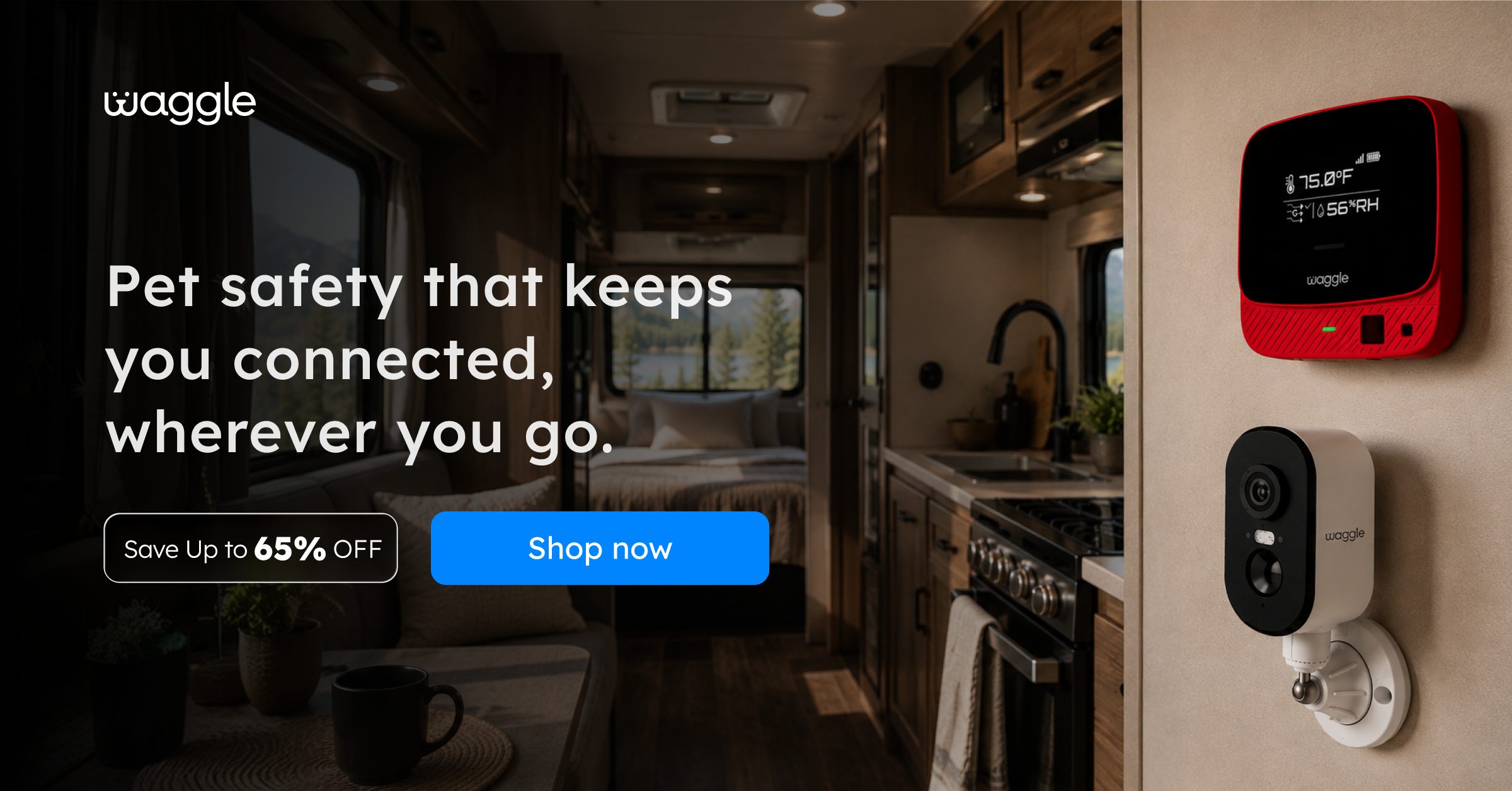
Deploy your awning on the sun-facing side. Use reflective windshield and window covers. Run a vent fan to keep air circulating. And if you're leaving the rig, especially camping with pets, don't assume the AC will stay on. The RV temperature monitor sends real-time alerts over built-in 4G when temperature, humidity, or power status changes. You'll know the moment something shifts, even from miles away.
Deploy your awning on the sun-facing side. Use reflective windshield and window covers. Run a vent fan to keep air circulating. And if you're leaving the rig, especially camping with pets, don't assume the AC will stay on. The RV temperature monitor sends real-time alerts over built-in 4G when temperature, humidity, or power status changes. And when you want to see for yourself, the RV Pet camera lets you check in on your pet live, so you're not just trusting the AC held; you can watch them settle in from anywhere. You'll know the moment something shifts, even from miles away.
4. Wildlife You Weren't Expecting
Beautiful campsites are beautiful because they're in wild places and wild places have residents. Bears, raccoons, javelinas, coyotes, and snakes are all more active around remote, less-trafficked sites. Food smells travel, and an RV with an open compartment or an unsecured trash bag is an invitation.
Store food inside the rig, not in exterior compartments. Clean your grill after every use. Secure trash in animal-resistant containers or take it to the campground dumpster before nightfall. Walk the perimeter of your site when you first arrive and look for tracks, burrows, droppings, and anthills. If you're camping with pets, keep them leashed until you've scoped the area. Local critters carry local diseases, and your dog's curiosity doesn't come with a risk assessment.
5. Poor Cell Signal in an Emergency
That remote hilltop or canyon site might be the most photogenic spot in the campground and also the one with zero bars. In an emergency, medical, mechanical, or weather-related, you need to be able to make a call or send a message.
Test your signal when you arrive. Download offline maps before you lose service. Know the physical address or GPS coordinates of your campsite so you can relay them to emergency services. If you're a frequent boondocker, a cell signal booster or satellite communicator is worth the investment. Beautiful and remote shouldn't mean beautiful and unreachable.
6. Uneven Terrain That Stresses Your Rig
Scenic sites are rarely flat. Slopes, ruts, and soft shoulders are part of the landscape, and parking on them without proper leveling puts stress on your frame, slides, and door seals. An unlevel fridge runs inefficiently and can be damaged over time. Doors that don't latch properly become a safety issue in wind.
Carry leveling blocks and use them every time, even if the slope looks minor. Use a bubble level or your rig's onboard leveling system before you unhitch. Check that your stabilizer jacks are on solid ground, not soft dirt that could compress overnight.
7. No Access to a Vet When Your Pet Needs One
Remote beauty means remote everything, including veterinary care. A dog who eats something off the trail, steps on a thorn buried in tall grass, or has a reaction to a local plant might need help fast. The nearest clinic could be an hour away and closed for the evening.
Before you arrive at a new site, save the closest emergency vet's address and number. Carry a pet first-aid kit with tweezers, antiseptic, gauze, and diphenhydramine for mild allergic reactions. And for real-time guidance when you can't get to a clinic, Waggle Vet connects you to a licensed veterinarian 24/7 with no appointment, no drive, and an emergency fund of up to $750 for accidents and sudden illness.
The Bottom Line
The prettiest campsites you'll ever park at are worth every mile it took to get there. They just come with risks that don't always announce themselves. Flooding, fumes, heat, wildlife, signal dead zones, bad terrain, and limited vet access—these aren't reasons to skip the beautiful spots. They're reasons to show up ready.
Add them to your checklist, bring along smart RV monitoring solutions, and let stunning campsites stay truly stunning.
