How to Choose the Best RV Protection
When comparing RV warranties, start by considering:
- Your RV’s age and mileage
- Whether it’s a motorhome or travel trailer
- How often you travel
- Whether you live in your RV full-time
- The level of coverage you need
- The reputation of the warranty provider
- The claims process
- Repair-facility flexibility
There isn’t one warranty that’s best for everyone. The best RV warranty is the one that fits your RV, travel habits, and budget.
What Is an RV Extended Warranty?
An RV extended warranty is a service contract that helps pay for covered mechanical and electrical repairs after the manufacturer’s factory warranty expires.
Instead of paying thousands of dollars out of pocket for a failed air conditioner, refrigerator, slide-out motor, transmission, or leveling system, you pay your deductible while the warranty provider covers eligible repair, labor, and replacement costs.
Coverage varies significantly from one contract to another, and every provider is different. Understanding your options before purchasing is essential.
Repair Costs Are Only Going Up
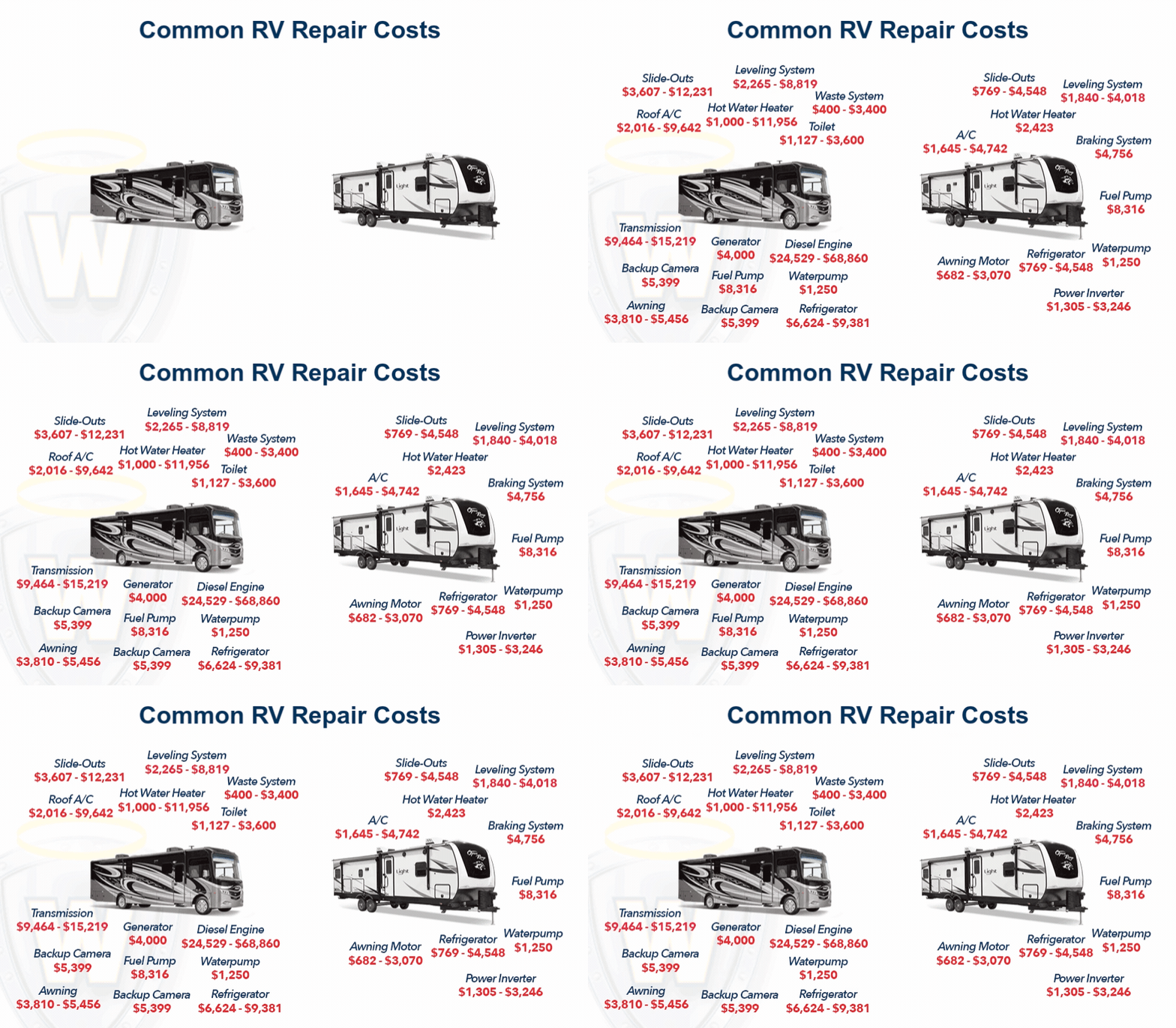
The reality is that RVs break down. The cost of RV parts and labor continues to rise, making unexpected repairs a growing threat to your travel budget and vacation plans.
While costs vary by RV, common repairs to motorhomes and towable RVs can quickly become expensive—which is why many owners choose an extended warranty.
Levels of RV Warranty Coverage
Most RV warranty plans fall into four main categories.
Exclusionary Coverage
Exclusionary coverage is the highest level of protection available. Rather than listing every covered component, these contracts cover nearly every mechanical and electrical part except those specifically excluded in the agreement.
This type of plan typically provides the greatest peace of mind and is often recommended for:
- Newer motorhomes
- Full-time RVers
- Towable RVs with more sophisticated systems
Comprehensive Coverage
Comprehensive policies—also called stated-component or listed-component warranties—cover hundreds of listed components throughout the RV, including many major systems such as:
- Engine and transmission
- Electrical system
- Plumbing
- Appliances
- Slide-outs
Although not as all-encompassing as exclusionary coverage, comprehensive plans still provide extensive protection at a more affordable price point. These policies can be a strong fit for seasonal travelers seeking a balance between coverage and budget.
Powertrain-Only Coverage
Powertrain plans focus on the components responsible for moving the RV down the road, including the engine, transmission, and drivetrain.
These policies are generally less expensive but do not cover many of the coach systems RV owners rely on while camping. Powertrain-only plans can be a fit for:
- Motorhome owners with some DIY experience
- Budget-conscious travelers
- Owners primarily concerned with essential driving components
Coach-Only Coverage
Coach-only warranties protect the living portion of the RV, including:
- Appliances
- Heating and cooling systems
- Plumbing
- Electrical components
- Slide-outs
- Leveling systems
- Other interior amenities
These plans are often paired with separate chassis warranties or selected by owners who primarily want to protect their RV’s living features.
Where to Buy an RV Extended Warranty
A critical decision in RV ownership is deciding where to purchase an extended warranty.
Many RV owners are offered coverage when buying their RV from a dealership, while others choose to shop independently through a warranty broker such as Wholesale Warranties.
Understanding the difference before arriving at the dealership can help you make a more informed decision.
Dealer Warranty vs. Broker Warranty
How Dealer Warranties Work
When purchasing an RV from a dealership, you’ll typically be presented with an extended warranty option during the finance process. Dealerships generally sell service contracts from one or two preferred providers.
Pros
- Convenient
- Available immediately during the buying process
- May be rolled into financing*
Cons
- Limited provider options
- Potentially limited repair network
- Less opportunity to compare pricing and coverage
- Higher markups may be built into the contract
- The seller may not specialize in warranties
Bundling a warranty into financing means paying interest on a higher loan balance. Industry experts often recommend paying for the warranty separately.
How Broker Warranties Work
An RV warranty broker specializes in RV protection plans and works with multiple warranty administrators rather than representing only one company.
Although some brokers may have their own claims-assistance departments, warranty sellers do not—and legally cannot—administer their own claims.
Because brokers can compare several plans side by side, they can often help RV owners find coverage that better fits their RV, travel habits, and budget.
Pros
- Ability to compare multiple providers
- More coverage options for different RV types and model years
- Experienced specialists
- Competitive pricing
Cons
- Requires additional research
- Some companies require waiting periods*
Not all brokers sell contracts with waiting periods. Many reputable providers instead require a pre-purchase or pre-contract inspection on used RVs to document the vehicle’s condition and identify pre-existing issues. With some plans, an inspection can eliminate the waiting period.
Third-Party and Broker Warranties Explained
One area that causes confusion for many RV owners is understanding who actually provides the warranty.
Whether purchasing through a broker, dealership, or online provider, you’re working with a third-party seller. The primary difference is that a broker may have access to multiple plans, while many other providers represent only one.
- The broker or seller helps you select and purchase a plan.
- The warranty administrator manages the contract, approves covered repairs, and pays repair facilities.
- The repair facility diagnoses the issue and completes the repair.
The administrator plays one of the most important roles because it is responsible for handling claims and reimbursing repair shops for covered repairs. Its financial stability and reputation should be carefully evaluated.
Red flag: A warranty company that is not transparent about who administers its claims.
Look for warranty companies that partner with highly rated, insurance-backed administrators. A knowledgeable broker can also explain contract language, answer questions throughout ownership, and assist if claim issues arise.
Warranties for Used RVs
Buying a pre-owned RV does not mean you are out of luck when it comes to protection.
Many extended warranty providers offer coverage for used RVs—including privately purchased units—provided they meet certain age, mileage, and inspection requirements.
Because repair costs generally increase as RVs age, many buyers of used coaches choose financial protection against unexpected breakdowns.
When purchasing from a private seller, ask whether the RV has an existing transferable service contract. In some cases, coverage may transfer to the new owner, saving time and money.
Timing Is Everything: When Should You Buy an RV Warranty?
The best time to purchase an RV extended warranty is before you need it.
Many RV owners begin shopping as their manufacturer’s warranty nears expiration. Depending on the provider, you may also be eligible when purchasing:
- A new RV
- A used RV from a dealership
- A privately owned motorhome or camper
Buying earlier can provide access to more coverage options because eligibility is typically based on the RV’s age, mileage, and overall condition.
You generally won’t receive a longer term, better rate, or broader coverage than when the vehicle is brand new.
Consider purchasing an RV warranty when you are:
- Buying a new RV and want coverage after the factory warranty expires
- Purchasing a used RV from a dealership or private seller
- Planning a long road trip where a major breakdown could disrupt your plans and budget
- Transitioning to full-time RV living
- Approaching the provider’s age or mileage eligibility limits
Matching Coverage to Your RV Travel Lifestyle
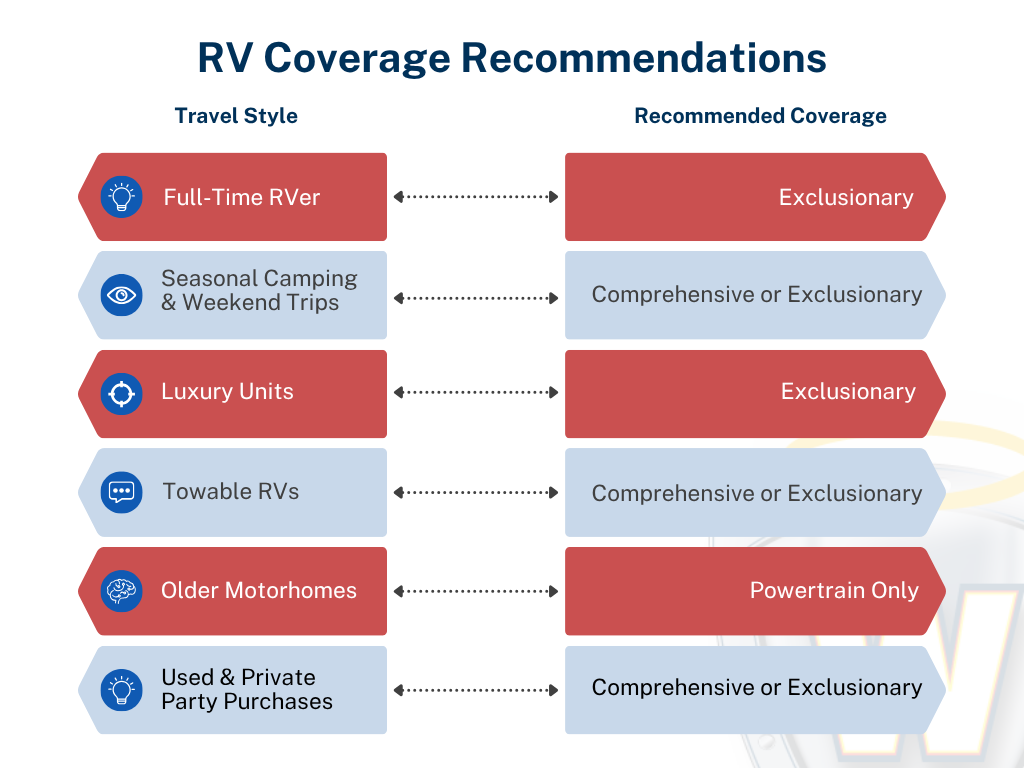
The best warranty is not necessarily the one with the broadest coverage. How you use your RV—and your tolerance for financial risk—are important considerations.
A warranty specialist can help assess your lifestyle, vehicle, and desired level of protection. The guidance below can help frame that conversation.
Full-Time RVers
If your RV is your primary residence, you will likely accumulate more miles and operating hours than the average owner.
Full-time travelers often benefit from the highest levels of coverage, including exclusionary or comprehensive plans, because frequent use increases the likelihood of unexpected repairs.
Ask your warranty specialist about plans designed to accommodate full-time RV living. Many plans require you to disclose full-time use at sign-up.
Seasonal or Part-Time Travelers
Snowbirds and seasonal campers typically use their RV for several months each year before storing it.
A comprehensive warranty often provides a good balance between cost and coverage, protecting both driving components and appliances used during the travel season. Depending on the vehicle type, exclusionary coverage may also be a smart option—particularly for luxury units.
Keep in mind that some failures occur because of disuse, so coverage can still be valuable even when you only travel periodically.
Occasional Weekend Campers
When an RV is used only for occasional weekend trips or a few vacations each year, repair risk may be lower because fewer miles and operating hours are accumulated.
Depending on the age and value of the RV, a budget-friendly comprehensive or powertrain plan may provide meaningful protection without paying for coverage you are unlikely to use.
DIY RV Owners
Many experienced RV owners prefer handling routine maintenance and minor repairs themselves.
Even skilled DIYers may still choose extended warranty protection for major mechanical failures or expensive components that require specialized tools or professional repair facilities.
Routine maintenance and normal wear and tear are generally not covered under warranty. Performing your own maintenance typically does not affect coverage, provided the contract’s maintenance requirements are followed and properly documented.
Before undertaking a major project, contact the administrator to confirm that the planned work complies with the contract.
An RV service contract can complement your maintenance routine without replacing it.
Choosing the Right Fit: Which RV Warranty Is Best?
There is no single “best” RV warranty for every traveler. Compare providers carefully and focus on the factors that matter most for your situation.
Coverage Inclusions and Exclusions
Read the contract carefully to understand exactly what is and is not covered.
Pay close attention to exclusions involving:
- Maintenance requirements
- Pre-existing conditions
- Wear-and-tear items
- Cosmetic items
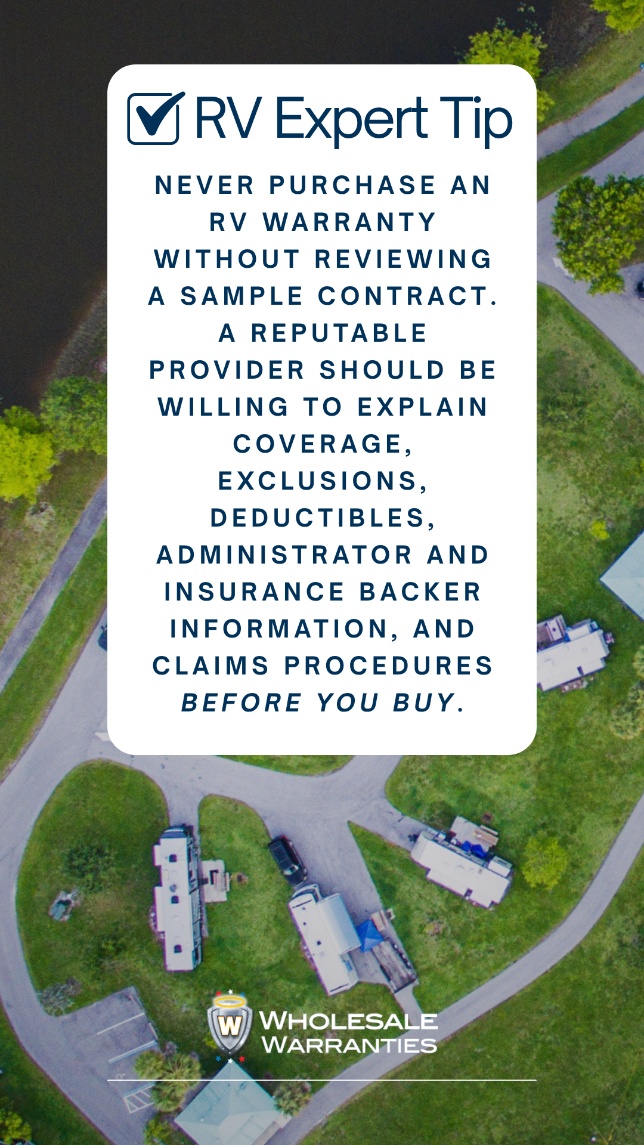
**RV expert tip: **Never purchase an RV warranty without reviewing a sample contract. A reputable provider should be willing to explain the coverage, exclusions, deductibles, administrator, insurance-backer information, and claims procedures before you buy.
Claims Process
A smooth claims experience can make all the difference during an unexpected breakdown.
Ask questions such as:
- How quickly are claims typically processed?
- Is customer support available while traveling?
- What are the service hours?
- Are mobile mechanic services available?
- Who do I contact to authorize repairs?
Understanding the process ahead of time helps avoid surprises later.
Repair-Facility Network
Many RV owners have a preferred repair facility at home and travel across the country throughout the year.
Look for providers that allow repairs at licensed facilities nationwide rather than limiting customers to a small network. Greater flexibility can be especially valuable when you are hundreds of miles from home.
Deductibles and Premiums
Lower premiums often come with higher deductibles or reduced coverage.
Compare the overall value of each plan instead of focusing solely on the monthly cost. A slightly higher premium may provide substantially broader protection and lower out-of-pocket expenses when a major repair occurs.
Transferability
When you plan to sell your RV before the warranty expires, transferable coverage can add value for prospective buyers.
Some service contracts allow remaining coverage to transfer to the next owner, potentially making the RV more attractive on the resale market and offering additional peace of mind.
Provider Reputation
Thoroughly research the company behind the warranty. Look for providers with:
- Strong customer reviews
- A positively regarded administrator
- Significant experience in the industry
- Transparent contract terms
- Responsive customer service
- Experience working specifically with RV owners
- BBB accreditation
A warranty is only as valuable as the company standing behind it.
Protect Your Adventures With Confidence
Your RV represents a lifestyle of freedom, adventure, and countless memories waiting to be made.
The right extended warranty can protect that investment by reducing the financial impact of unexpected breakdowns and failures—allowing you to focus more on the journey and less on potential repair bills.
A Note From Wholesale Warranties
Every RV owner travels differently, so there is not a single “best” RV warranty for everyone. The right choice depends on your RV, how often you travel, where you camp, and the level of protection you are looking for.
As a Harvest Hosts Commercial Partner, Wholesale Warranties helps members compare coverage options, understand the differences between plans, and make an informed decision about their protection.
Harvest Hosts Member Benefit: Members receive one year of complimentary RV roadside assistance with any qualifying RV warranty purchase through Wholesale Warranties. Visit Wholesale Warranties website to get your free quote!
