Sign Up For 15% Off HERE
Famous not only for its glaciers but also for popular attractions like the Going-to-the-Sun Road, Lake McDonald, Logan Pass, and the Flathead River, Glacier National Park in Montana encompasses over one million acres and more than 700 miles of trails. Some of the best hikes include the Highline Trail, Avalanche Lake, and Grinnell Glacier; more than 1,500 people hike the Hidden Lake Trail per day. Established in 1910, Glacier National Park also saw more than . Complete with all the perks of RV camping in one of America's northernmost national parks, Glacier is also home to black bears, bighorn sheep, mountain lions, garter snakes, beavers, and lynx. Harvest Hosts has plenty of locations within an hour of the entrances where you can park your RV overnight at a working farm, brewery, or distillery.
Harvest Hosts is a membership program for RV camping: unlock unlimited overnight stays at thousands of locations.
Learn MoreMost people visit Glacier National Park from May through September. Construction throughout the park often happens during the same months, when warmer conditions and longer days make it easier for crews to work. Going-to-the-Sun Road also opens in early July (depending on snowfall), which coincides with the start of the Logan Pass Shuttle season. August and September are the best months to see glaciers from various viewpoints within the park. If you plan to visit the park in the summer and fall months, arrive before 6 a.m. or after 3 p.m. to avoid most of the crowds.
About three-and-a-half hours north of Helena, Montana's capital, Glacier National Park is part of the Crown of the Continent area and the Glacier Waterton International Peace Park. To the direct east lies the Blackfeet Indian Reservation. To the west and south lies the Flathead National Forest. RVers may also enjoy a visit to the Hungry Horse Dam that sits at the north end of the Hungry Horse Reservoir. Crafted during the end of World War II, it's a sight to behold.
Inside the park. Of Glacier National Park's 13 campgrounds, only eight permit RV camping, but none offer hookups. Camping is limited to 14 days total from July 1 to Labor Day, and 30 days total between Labor Day and June 30. Generator use is prohibited in specific areas of Fish Creek, Many Glacier, Rising Sun, Sprague Creek, St. Mary, and Two Medicine. For the 2026 season, Two Medicine is closed for construction. Normally, the campground offers access to hiking trails to Running Eagle Falls and permits RVs up to 35 feet long. RVs up to 40 feet long are permitted in Apgar and St. Mary Campgrounds, two of the largest in the park. Fish Creek and Many Glacier Campgrounds allow 35-foot-long RVs, while 26-foot RVs are the maximum permitted in Avalanche Campground. Sprague Creek and Rising Sun restrict RV lengths to 21 feet.
Tips on reserving a campsite. Identify which areas of Glacier National Park you want to explore, then make reservations at the closest campground. The campground maps on the park's website can help orient you to popular attractions like Lake McDonald, Logan Pass, and the Goat Lick Overlook. If you can't reserve a campsite at your preferred location for the full stay, camping at a few different sites can help you see more of the park.
Camping outside the park with Harvest Hosts. RV camping near Glacier National Park may be available at the Blackfeet Nation Campgrounds, Flathead National Forest, and the Helena-Lewis and Clark National Forest. Blackfeet Nation Campgrounds offer electric hookups, but availability varies. In exchange for permission to camp on private property, owners request that you patronize their distilleries, attractions, breweries, and working farms. Finding a place to rest your head, experience local culture, and replenish your strength is a real treat when camping overnight in Montana.

Secluded Mountain Pasture RV Retreat

Scenic Forest Retreat
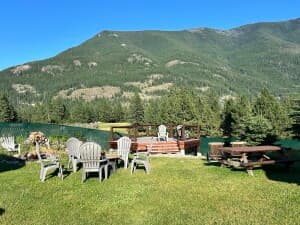
Scenic Mountain Winery Escape

Glacier Gateway RV Retreat

Gateway Camp by Glacier National Park

Gravel RV Site Near Town Center

Harvest Hosts Attraction




