Sign Up For 15% Off HERE
Fondly referred to as J-Tree by local Californians and return visitors, Joshua Tree National Park sits at the border between the Mojave and Colorado Deserts in southern California. Despite the arid landscape, some three million visitors travel to the park every year to visit popular spots like Keys View, Skull Rock, the Cholla Cactus Garden, and Barker Dam. From the six mountain ranges that roam through the park to Queen, Pleasant, and Lost Horse Valleys, J-Tree sustains a diverse population of wildlife, including kangaroo rats, bighorn sheep, golden eagles, mountain lions, white-tailed antelope squirrels, desert spiny lizards, and the Giant Hairy Scorpion. Eight campgrounds support RV camping in Joshua Tree National Park, which ranges in elevation from 536 feet to over 5,800 feet at Quail Mountain's summit. Harvest Hosts has plenty of locations within an hour of the entrances where you can park your RV overnight at a working farm, brewery, or distillery.
Harvest Hosts is a membership program for RV camping: unlock unlimited overnight stays at thousands of locations.
Learn MoreJoshua Tree National Park welcomes most visitors from October through May, with the highest crowds during spring break in March and April. Park temperatures typically stay cooler in spring and fall. Starting in the early months of the year, wildflowers across the park bloom, peaking in April before shriveling in June's sweltering heat. Campsites are easier to find in the summer, but from September through May, campgrounds tend to fill up fast. Plan to arrive midweek, ideally before 8 a.m. Of the three main entry points into Joshua Tree National Park, the west entrance near Joshua Tree Village often sees the most traffic. Enter just west at Twentynine Palms or farther south, directly west of Cactus City, to avoid long wait times.
Joshua Tree National Park is located within a few hours of many major California cities (San Diego, Los Angeles, and Bakersfield), as well as Las Vegas, Nevada, and Phoenix, Arizona. Travel west and north along California's central coast for a memorable RV beach getaway. Experience other Southern California national parks by visiting Channel Islands National Park on your way up the coast, or head northeast to Death Valley National Park. On your way in or out, consider visiting Mount San Jacinto or the Santa Rosa & San Jacinto Mountains National Monument.
Inside the park. All eight campgrounds in Joshua Tree National Park offer RV camping. Most campgrounds limit RVs to 35 feet in length, but many campsites may only allow 30-foot RVs or smaller. Black Rock, Cottonwood, Indian Cove, Jumbo Rocks, and Ryan Campgrounds require reservations, which you can make up to six months in advance of arrival. Cottonwood Campground is located nearest the south entrance, while White Tank and Belle Campgrounds sit furthest north.
Tips on reserving a campsite. Make reservations well in advance if you plan to visit J-Tree National Park during its busy season. Verify the campsite you reserve can accommodate your RV based on length, and note that none of the park's campgrounds offer hookups.
Camping outside the park with Harvest Hosts. Many travelers opt to reserve RV camping near Joshua Tree National Park for at least a few nights, especially during the hottest times of the year. A lack of hookups in the park limits power sources for air conditioning units. RV camp at a Harvest Hosts location for a day of rest before exploring the park, or stop by on your way out before you hit the open road.

Desert Stargazing Boondock Site

SoCal Desert Starry Night Campground

Remote Desert Stargazing Retreat
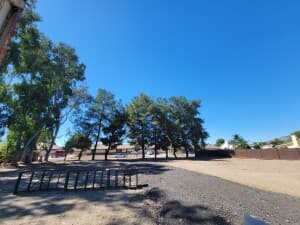
Quiet Gated SoCal Yard Stay

Boondockers Welcome Host

Harvest Hosts Attraction

Harvest Hosts Attraction

Harvest Hosts Attraction

Boondockers Welcome Host



