Sign Up For 15% Off HERE
Established in 1935, Shenandoah National Park in northern Virginia occupies over 200,000 acres of beautiful countryside and scenic overlooks. Among the secluded forests, rolling wildflower fields, and tucked-away waterfalls live bobcats, black bears, deer, turkeys, and owls. Shenandoah sits along a 105-mile stretch beside the Blue Ridge Mountains. Skyline Drive brings visitors to several popular spots in the park, including Old Rag Mountain and Big Meadows, as well as the Dickey Ridge and Harry F. Byrd Sr. Visitor Centers. When you're RV camping in Shenandoah National Park (Virginia's only national park), it's easy to see how restorative even a day's short hike can be. Harvest Hosts has plenty of locations within an hour of the entrances where you can park your RV overnight at a working farm, brewery, or distillery.
Harvest Hosts is a membership program for RV camping: unlock unlimited overnight stays at thousands of locations.
Learn MoreSummer and fall are the most popular seasons in Shenandoah National Park, and for good reason. While much of the park comes alive starting in March, Wildflower Weekend in May kicks off the busy season. The wildflowers grow even more beautiful as park visitation increases into June and through August, when lines begin to form at the Front Royal and Thornton Gap entrances. Wildlife also becomes more active in the summer, and the park hosts the annual Night Sky Festival. Hiking trails will be busiest in October, especially popular routes like Whiteoak Canyon, Old Rag, and Dark Hollow Falls. Leaf peeping tentatively peaks in mid-October, but there's no exact timing. If you want to avoid full-to-capacity parking lots, schedule your visit for early in the morning or late afternoon; alternatively, Shenandoah National Park stays open during winter, when hiking is still an option. However, you'll miss many of the ranger programs that happen throughout the rest of the year.
The Front Royal entrance to Shenandoah National Park is about an hour and a half from Washington, D.C. Other gateway cities include Luray (Thornton Gap entrance) and Elkton (Swift Run Gap Entrance). The Rockfish Gap entrance sits north of Interstate 64 and U.S. Route 250 intersection just west of Afton. Travel to Washington, D.C. to visit the Lincoln Memorial, Washington Monument, and Thomas Jefferson Memorial, three must-visit destinations critical to our nation's history. Speaking of which, it's also worth visiting the Smithsonian National Museum of Natural History, whose collections include roughly 157 million artifacts and specimens. If you're looking to travel further south, Blue Ridge Parkway connects to the southern Rockfish Gap entrance and brings you to North Carolina's Great Smoky Mountains National Park.
Inside the park. Four campgrounds offer RV camping in Shenandoah National Park: Mathews Arm, Big Meadows, Lewis Mountain, and Loft Mountain. Each is open seasonally, typically from early spring until late fall. Campgrounds lack hookups and posted RV length restrictions, and all have both pull-through and back-in sites except for Loft Mountain (back-in only). Lewis Mountain is the only campground without a dump station. Mathews Arm Campground sits closest to the Front Royal entrance and offers a mix of reservable and first-come, first-served campsites. Big Meadows offers access to its namesake and Dark Hollow Falls, while Lewis Mountain is right nearby. Reserve or claim a spot in Loft Mountain if you want to explore the southern part of the park's trails and waterfalls from a base in Big Flat Mountain.
Tips on reserving a campsite. Reserve your campsite up to six months ahead of time, especially if you plan to visit over the weekend or around the holidays. Lewis Mountain is the smallest campground and offers more privacy, but Big Meadows is the most centrally located. If you want to backcountry camp in Shenandoah National Park, you'll need a permit to explore the vast acreage and more than 500 miles of trails.
Camping outside the park with Harvest Hosts. RV camping near Shenandoah National Park offers greater access to services, but availability can vary depending on the season. Depending on what you want to explore in the nearby area, staying with a Harvest Host could simplify your journey. Arrange for fee-free camping on private property in advance, so you don't have to worry about rushing to secure your spot before campground reservations fill up. Check out our ultimate guide to RV camping in some of Virginia's best spots for ideas on where to camp outside Shenandoah National Park.
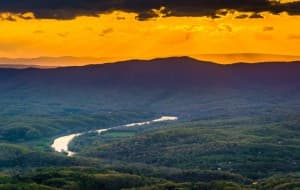
Charming Farm-Grown Brewery Retreat

Historic Family Farm Market & Tasting
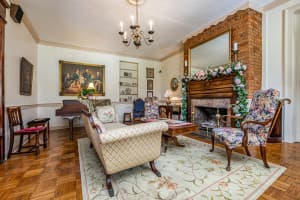
Historic 18th-Century Inn RV Stop

Charming Downtown Gift Shop & RV Stop

Charming Foothill Farm Retreat

Scenic Shenandoah Riverfront Retreat

Scenic Riverfront Cattle Farm

Harvest Hosts Farm

Boondockers Welcome Host




